The short answer
For an Indian kitchen that cooks every day, granite is usually the safer choice: it is natural, takes heat from a hot tawa or kadhai, and resists scratches. Engineered quartz resists turmeric stains better but can be marked by direct heat, because it contains resin. Natural quartzite is a third option: hard, heat-tolerant and lighter in colour.
Key takeaways
- Granite takes heat from tawa and kadhai; engineered quartz can be marked by direct heat.
- Quartz resists turmeric stains most easily; dark, patterned granites hide marks well.
- Quartzite is a natural, heat-tolerant stone, not the same as engineered quartz.
Advice for you
Tell us who you are and we will show you what matters most in this guide.
I am building or renovating my home
Be honest about how your kitchen is used. If hot vessels go straight onto the counter, choose granite and save yourself years of trivet reminders.
Book a visit to see full slabsI am an architect or interior designer
Specify the edge profile and cut-outs for the hob and sink, and note sealing for light granites and quartzite.
Request samples for a clientI am a contractor or builder
Support long counters properly and ease the edges. Seal light granite before handover, after cut-outs are done.
Work out quantitiesI live outside Bengaluru
Granite for kitchens is easy to choose remotely. Send your counter drawing and we can show matching slabs on video.
Choose slabs on a video callWhat is the difference between quartz and granite?
Granite is a natural stone, cut from the earth and polished. Engineered quartz is a man-made slab of crushed quartz bound with resin and pigments. Quartzite, which people often confuse with quartz, is a natural stone: a sandstone turned very hard by heat and pressure.
| Granite | Engineered quartz | Quartzite | |
|---|---|---|---|
| Made by | Nature | Factory: quartz and resin | Nature |
| Heat from a hot pan | Good | Can scorch or discolour the resin | Good |
| Turmeric and oil stains | Good when sealed | Very good | Good when sealed |
| Scratches | Very good | Good | Very good |
| Look | Natural pattern; every slab differs | Even, repeatable colour | Natural, often light with fine lines |
| Sealing | Yes, light colours more often | No | Yes |
Why heat matters in an Indian kitchen
Indian cooking puts hot vessels on the counter: a tawa off the flame, a pressure cooker, a kadhai of oil. Natural granite and quartzite tolerate this. Engineered quartz manufacturers usually advise using trivets, because heat can mark the resin. If your kitchen is used hard by cooks who will not reach for a trivet, granite is the more forgiving surface.
What about turmeric and oil?
Quartz is non-porous, so turmeric, chilli and oil wipe off easily. Sealed granite resists them well too, especially darker and patterned granites, which also hide any faint marks. Light granites need sealing more often. Wipe spills promptly on any counter.
Granites that suit Indian kitchens
- Black Galaxy: black with golden flecks that hide crumbs and water marks.
- Absolute Black: plain deep black for a modern kitchen; shows water marks.
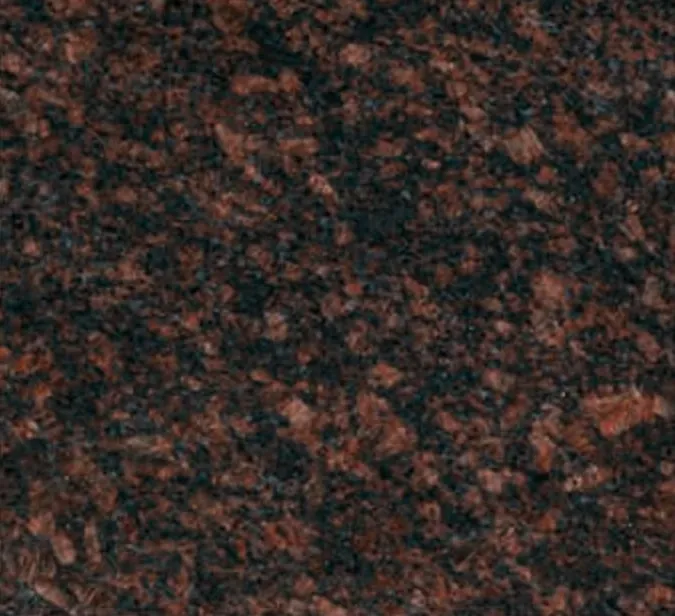
- Tan Brown: dark brown with black and red-brown crystals; very forgiving.
- Colonial White: light, for a bright kitchen; seal regularly.
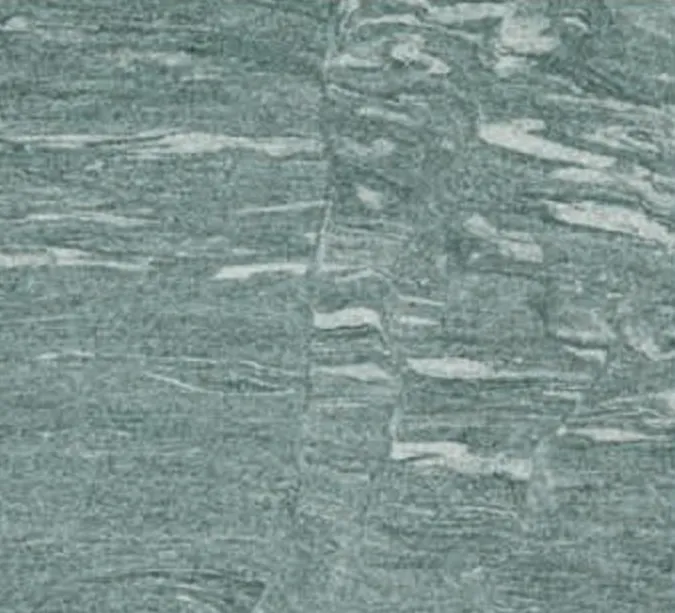
- Kuppam Green: sea-green with white streaks, for a kitchen with character.
Where quartzite fits
If you want a light, marble-like counter without marble's weakness to acids, natural quartzite is worth seeing. Golden Macaubas from Brazil has a white ground with fine peach-gold lines and suits kitchen counters. It still needs sealing. Never use marble on a working Indian kitchen counter: lemon, tamarind and tomato etch it within minutes.
How to decide
- Heavy daily cooking, hot vessels on the counter: granite.
- Light cooking, a strict trivet habit, and a need for a very even colour: engineered quartz.
- A light, natural, marble-like look that takes heat: quartzite.
- A mixed plan: granite around the hob, another surface on an island or breakfast counter.
Read the best stone for a kitchen that gets used and black granite compared.