The short answer
Granite is the hardest-wearing stone for stairs and suits busy homes and outdoor steps. Marble suits indoor stairs that continue a marble floor, if it is honed or given anti-slip grooves. Kota stone is practical and grips well for service and outdoor stairs. Choose by traffic, light and whether the stairs must match the floor.
Key takeaways
- Granite wears longest on stairs; marble suits indoor stairs that continue a marble floor.
- Kota stone is practical and grips well on service and outdoor stairs.
- Hone or groove the treads, round the nosing and cut all treads from one lot.
Advice for you
Tell us who you are and we will show you what matters most in this guide.
I am building or renovating my home
If elders or young children use the stairs, choose a honed or leathered finish and a visible edge contrast. Safety matters more than shine here.
Book a visit to see full slabsI am an architect or interior designer
Detail the nosing profile, grooves and riser stone on the drawing, and keep tread and floor from the same lot where they meet.
Request samples for a clientI am a contractor or builder
Cut treads from one lot and number them in order. Protect nosings during the rest of the work; they chip first.
Work out quantitiesI live outside Bengaluru
Send us your stair drawing with tread and riser sizes, and we can show you suitable slabs on video.
Choose slabs on a video callGranite, marble or Kota: how do they compare on stairs?
| Granite | Marble | Kota stone | |
|---|---|---|---|
| Wear on treads | Very low | Moderate; edges wear in time | Low to moderate |
| Grip | Good when honed, leathered or flamed | Slippery when polished and wet | Good in natural or honed finish |
| Look | Speckled or patterned; deep colours | Veined; matches marble floors | Plain, even, practical |
| Suits | Main stairs, outdoor steps, busy homes | Indoor stairs that continue the floor | Service, terrace and outdoor stairs |
When to choose granite
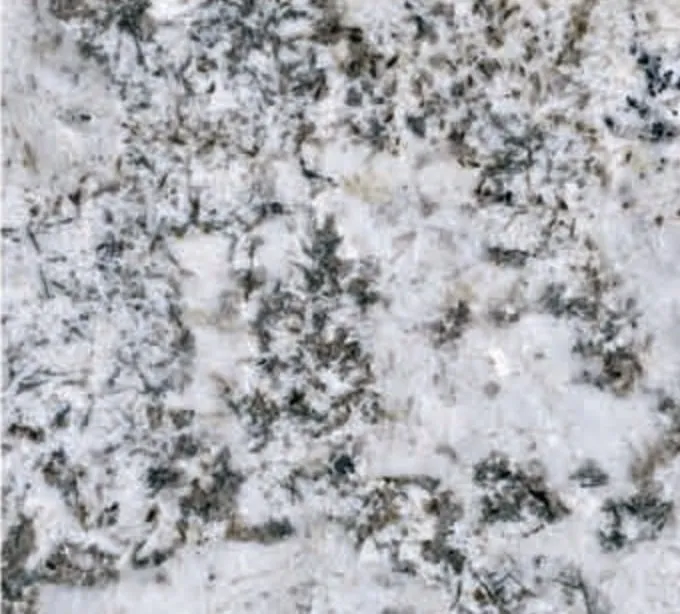
Stairs take more concentrated wear than any floor, at the edge of every tread. Granite handles it with the least wear. For a main staircase, Black Galaxy or Absolute Black give a strong edge against a lighter floor, while Viscount White or Alaska White keep stairs light. Outdoors, choose a flamed or rough finish for grip.
When to choose marble
If your living room is in marble and the stairs rise from it, marble stairs keep the space continuous. Statuario or Botticino Classico can run from the floor up the treads. Use a honed finish, or ask for anti-slip grooves near the nosing. Expect the front edges to need re-polishing over the years.
When to choose Kota stone
Kota Blue is a sensible choice for service stairs, terrace stairs and outdoor steps: it is hard-wearing, grips well and hides dust. It does not have the shine of granite or the veining of marble.
Details that make stairs safer and last longer
- Nosing: an eased or rounded front edge chips less and is kinder to feet.
- Grip: hone, leather or groove the tread near the edge; keep polish for risers.
- Contrast: a darker nosing or tread edge helps older family members see each step.
- Thickness: Akrruthi supplies 18 mm slabs; ask your contractor whether to add a nosing strip for a thicker-looking edge.
- One lot: cut all treads from one lot so the colour does not change halfway up.
- Risers: risers take little wear, so they can be polished or in a contrasting stone.
Should the stairs match the floor?
In an open space, matching stairs look calm and continuous. In a busy home, granite treads with marble or granite risers often work better: the stair stays practical while the floor stays the feature. Read choosing a finish before you decide.