The short answer
For a living room floor, choose the colour first, then the veining. White marble such as Statuario makes a room bright and formal; beige such as Botticino feels warm and hides wear. Bold veins suit large, simple rooms; calm stones suit busy furniture. Use a polished finish, large slabs and one lot for the whole room.
Key takeaways
- Choose the colour first: white for bright and formal, beige for warm and forgiving.
- Bold veins suit large, simple rooms; calm stones suit busy furniture.
- Use large slabs from one lot, and decide the vein direction before cutting.
Advice for you
Tell us who you are and we will show you what matters most in this guide.
I am building or renovating my home
Bring a photo of your sofa, curtains and wall colour to the store. Hold your phone next to the slab; it is the quickest way to see what will sit well together.
Book a visit to see full slabsI am an architect or interior designer
Mark vein direction and slab order on the layout, and say where the feature slabs should fall. Ask whether the lot has enough slabs for the full room.
Request samples for a clientI am a contractor or builder
Dry-lay the slabs in tag order before cutting, and keep the plainer slabs for areas under furniture and cupboards.
Work out quantitiesI live outside Bengaluru
Ask us to lay out the shortlisted slabs side by side on a video call, so you see them as a floor, not one by one.
Choose slabs on a video callWhite or beige?
White marble reflects light and makes a room feel larger and more formal, but it shows dust and marks sooner. Beige and cream marble feels warmer, hides everyday wear and suits wooden furniture. Many Bengaluru homes choose a white for the living room and a beige through the rest of the house.
| Style | Stones to consider | Why |
|---|---|---|
| Bright and formal | Statuario, Statuario Premium, Calacatta | Bright ground; veining as a feature |
| Warm and classic | Botticino Classico, Perlato Sicilia, Diana Royal | Even beige; forgiving of wear |
| Quiet and modern | Lasa White, Thassos White, Crema Marfil | Little veining; furniture and art lead |
| Bold and dramatic | Breccia Oniciata, Grigio Orobico | Strong pattern; suits large rooms |
Bold veins or a calm stone?
Bold veining, as in Statuario Premium or Calacatta, is the room's main feature, so it suits large, simple rooms with plain walls. In a smaller room or one with patterned rugs and busy furniture, a calmer stone such as Botticino Classico or Lasa White lets everything else breathe. If you love strong pattern but want calm floors, keep the floor quiet and put the bold stone on one wall.
Which finish suits a living room?
Polished is the usual choice: it deepens the colour and reflects light. Honed gives a soft, matte look that shows fewer scratches and is less slippery, and suits a relaxed, modern room. Whichever you choose, seal the floor after laying.
How should the slabs be laid?
- Use large slabs, so the room has fewer joints and the veining can flow.
- Buy the whole room from one lot, so shade and veining match.
- Decide the vein direction: usually along the longest wall, or towards the main window.
- Place the strongest slabs where they will be seen most, such as the centre of the room, and the plainer ones under furniture.
- Lay the slabs dry in order before cutting, and agree the layout before the mason starts.
Which stones work for a whole-house floor that flows into the living room?
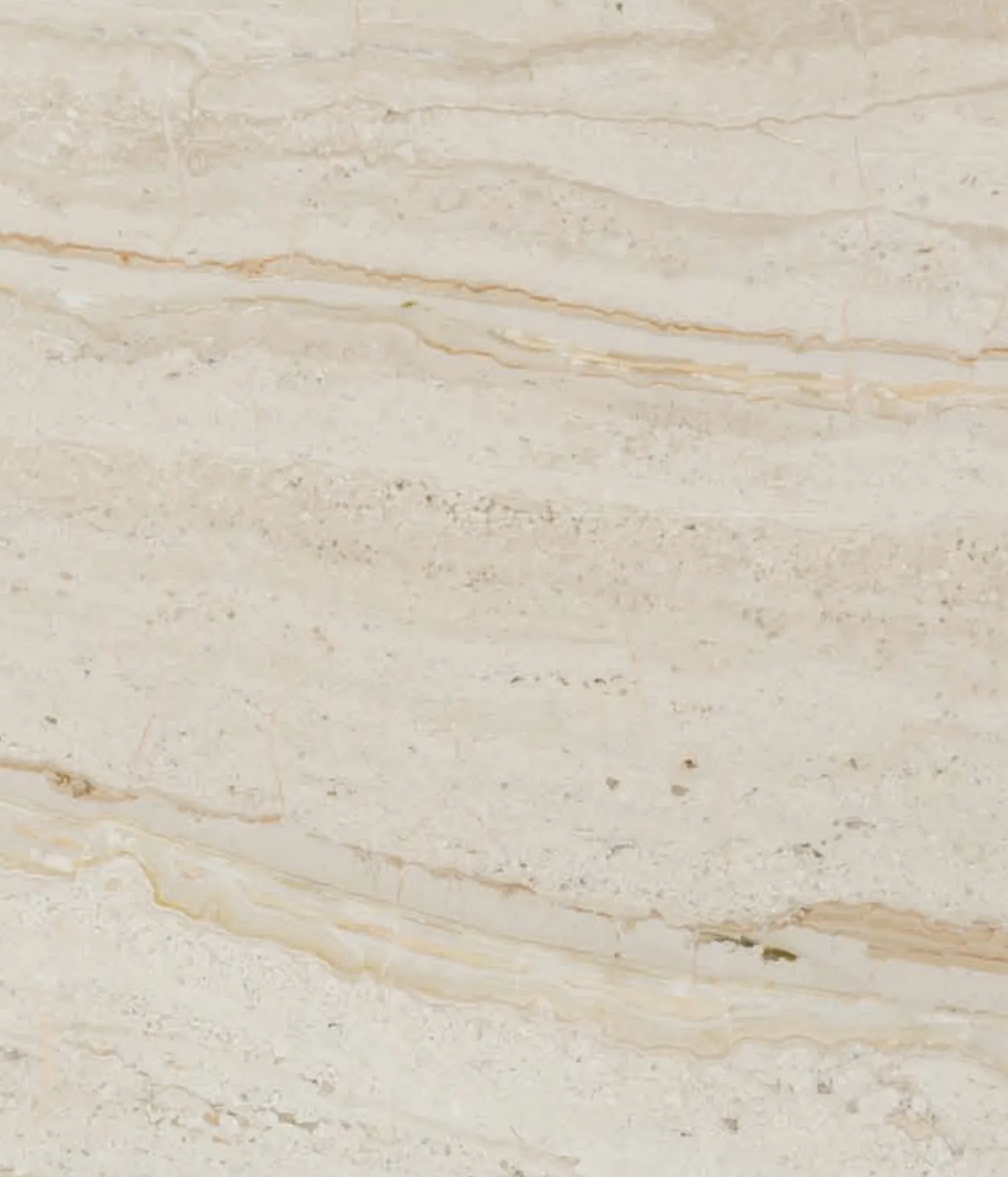
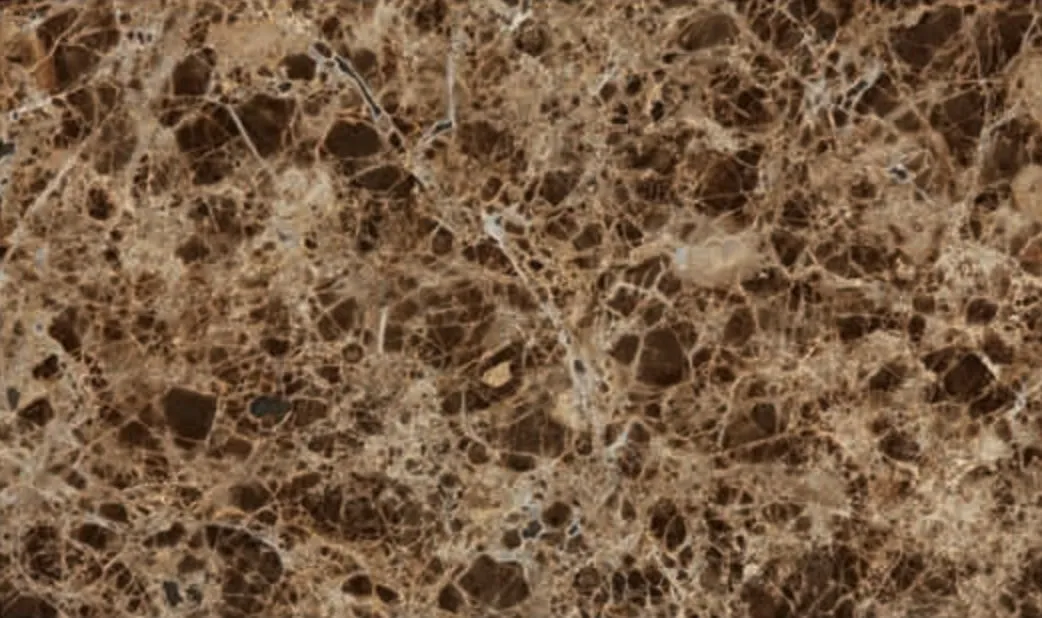
If the living room is open to the dining area and passages, one stone across all of them looks larger and calmer. Beige stones such as Perlato Sicilia and Diana Royal (Daino Reale) suit this well. A border in a darker stone such as Emperador Dark can mark the living area without changing the floor.
Read how to read a slab before your visit, and Statuario or Calacatta if you are choosing between the two Carrara whites.