The short answer
Onyx is a translucent, banded stone that glows when light passes through it, which makes it a feature material: backlit walls, bar fronts, vanity panels and lamps. It is softer and more fragile than marble, so keep it off floors and kitchen counters. Backlit onyx needs even LED lighting and careful fixing to avoid hot spots.
Key takeaways
- Onyx is translucent and glows when lit; it is a feature stone, not a floor.
- Keep it off floors, kitchen counters and outdoor areas.
- Backlit onyx needs even LED lighting, enough depth and a test with the actual slab.
Advice for you
Tell us who you are and we will show you what matters most in this guide.
I am building or renovating my home
Ask to see the slab with a light behind it before you choose. Onyx looks completely different lit from behind than lying on a rack.
Book a visit to see full slabsI am an architect or interior designer
Coordinate with a lighting designer early: cavity depth, diffuser, LED colour temperature, ventilation and access panels.
Request samples for a clientI am a contractor or builder
Handle onyx flat and supported; it cracks along its natural fissures. Fix it with adhesives that do not block light.
Work out quantitiesI live outside Bengaluru
Translucency varies slab to slab. Ask us to hold a light behind the shortlisted slabs on a video call.
Choose slabs on a video callWhat is onyx?
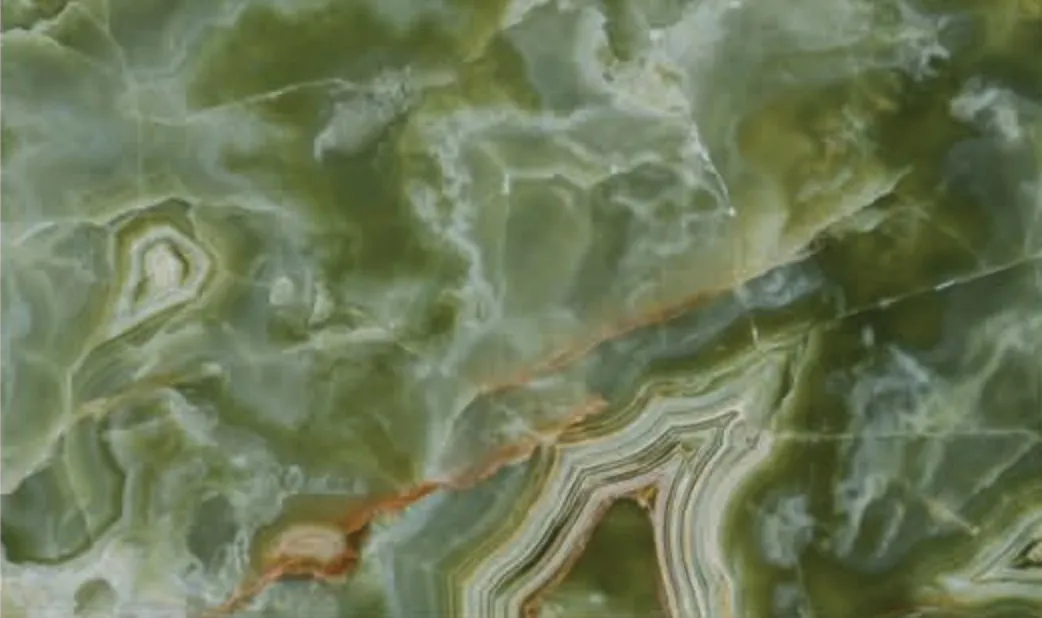
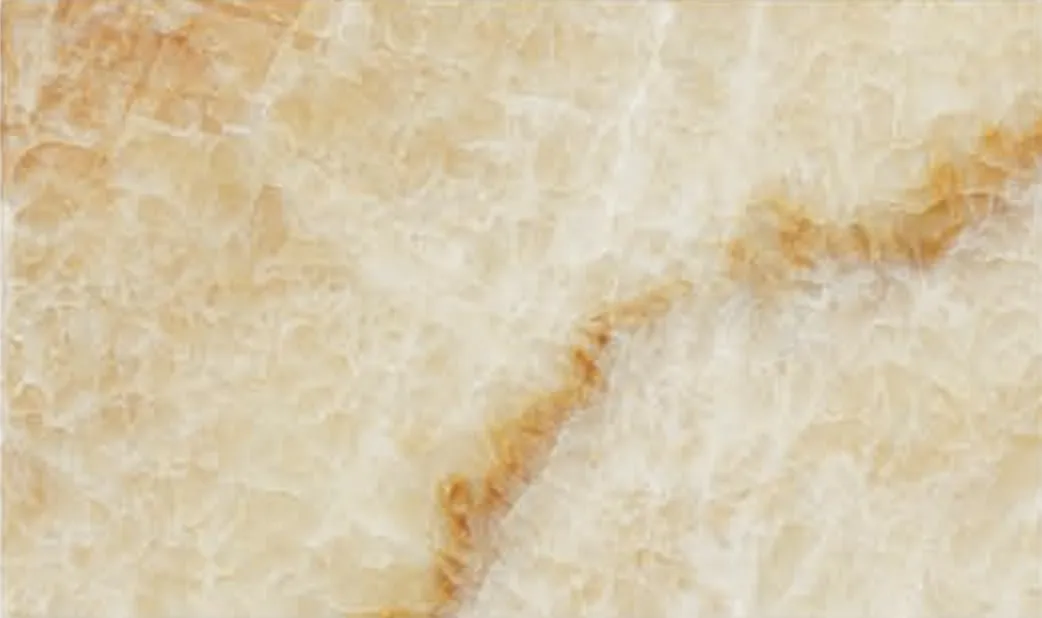
In the stone trade, onyx is a banded, translucent stone with layers of colour formed over time. Light passes through it, which is its whole appeal: a wall of onyx with lights behind it glows like amber, honey or jade. It is softer than most marbles and has natural fissures, so it is usually backed with mesh or resin for strength.
Onyx colours
| Stone | Look |
|---|---|
| Honey Onyx | Pale honey with white and amber bands |
| Golden Onyx | Translucent honey-gold with cloud-like cells |
| White Onyx | Translucent white with faint clouding |
| Green Onyx | Deep green with white and rust bands |
| Pink Onyx | Soft translucent pink with white clouding |
| Red Onyx | Orange and red swirling bands |
| Cappuccino Onyx | Dark brown with fine gold veining |
Where onyx works
- Backlit feature walls in living rooms, lobbies and dining areas.
- Bar fronts and reception counters, lit from inside.
- Bathroom vanity panels and walls away from heavy splashing.
- Pooja room backdrops, where a soft glow suits the space.
- Table tops and small accents that are treated gently.
Where onyx does not work
- Floors: it scratches and can crack under load.
- Kitchen counters: acids etch it and heat can damage it.
- Outdoors: sun and weather dull and damage it.
How backlit onyx is made
A backlit onyx wall is a small piece of engineering. The stone is fixed in front of a light source, usually LED panels or strips set back from the stone, so the light spreads evenly. Fabricators often bond onyx to clear glass or a diffuser panel for support, and some reduce its thickness so more light passes through. The aim is a smooth glow without bright spots from individual LEDs. Each slab is different, so test the actual slab with light before fixing.
- Choose warm-white LEDs for honey and gold onyx; neutral white for white onyx.
- Leave enough depth between LEDs and stone for even light, and provide ventilation.
- Plan access for maintenance of the lights.
- Book-match onyx slabs for a mirrored pattern across a wall.
Onyx with other stones
Onyx is usually the single feature in a room, so pair it with calm surroundings: Honey Onyx or Golden Onyx with a beige floor such as Botticino Classico; White Onyx with Thassos White; Green Onyx with dark granite.
Akrruthi lists the origin of onyx as confirmed on enquiry. Read how to read a slab before choosing a book-matched pair.